For decades, deep well pumps have been the quiet workhors behind reliable water supply in rural homes, farms, and small businesses. I’ve spent a good portion of my career tracing systems from the power pole to the wellhead, watching how small shifts in efficiency ripple into monthly energy bills and long-term maintenance costs. Goulds, with its long history of pump design and field-tested reliability, often sits near the center of those conversations. The question isn’t simply which pump moves water, but how to align a pump’s performance with real-world needs while keeping energy use sensible and predictable. That is where energy efficiency becomes not just a feature list, but a practical discipline.
To build a sound perspective, it helps to start with a grounded view of what deep well pumps do, how they fail to perform, and where efficiency gains actually live. Deep wells present a moving target. Water levels shift seasonally, pressure tanks introduce another variable, and the electrical supply sometimes comes with its own quirks. A Goulds pump that runs reliably at a specific point on the performance curve may react differently once you fine-tune a system for a new water demand profile or a different well drawdown rate. A practical approach blends field experience with a careful reading of manufacturer curves, site measurements, and real-world usage patterns.
The core idea behind energy efficiency in a deep well setup is simple in principle but nuanced in practice: you want a pump that moves the required volume of water at the lowest possible energy cost, without sacrificing reliability or longevity. In the field, that often means matching pump model, motor horsepower, and control strategy to a precise set of conditions—pump depth, well efficiency, water temperature, piping losses, and storage capacity. The Goulds line encompasses a spectrum from smaller, more efficient models intended for modest lift and steady flows to rugged, high-output configurations designed for larger homes or irrigation. The trick is to know where your site sits on that spectrum and how to fine-tune operation to avoid common energy drains.
What energy efficiency looks like in practice starts with the relationship between flow, head, and motor load. Every deep well installation has a best operating point where the pump delivers the required gallons per minute with the least electrical current draw. If you try to push a pump to deliver more water than you need, you pay for it in watts. If the system is mismatched, you’ll see short cycling on pressure tanks, repeated starting surges, or a motor that hums at high current without delivering proportional water. The goal is to land near that sweet spot and stay there as conditions shift, whether through changing water use patterns or a slowly dropping water table.
The field wisdom around Goulds pumps often starts with a straightforward diagnostic thread. First, verify the well’s static water level and drawdown, then match that data to a pump curve. You’ll quickly see whether the system is operating near its best efficiency point (BEP) or if it’s drifting toward a less favorable region of the curve. It’s not about chasing the highest possible efficiency rating on paper. It’s about consistent performance with reasonable energy use under realistic operating conditions. That distinction matters when you consider the total cost of ownership over five, ten, or fifteen years.
The rest of this piece blends practical experience with a framework that helps technicians and informed homeowners think clearly about Goulds deep well pumps and energy efficiency. You’ll find real-world examples, a discussion of when certain features matter most, and practical steps to improve efficiency without overhauling a functioning system.
Matching the pump to the well and the load
A key element in any efficiency-minded installation is the fit between the pump and the well. In many rural settings, the first encounter with a problem is a pump that “runs all day” or a motor that overheats during peak draw periods. A pump that is oversized for the actual lift will frequently spend long stretches near the startup point of the curve, where efficiency is not optimal. Conversely, an undersized pump will struggle to deliver the necessary flow at the required head, and the result tends to be a longer runtime, higher energy per gallon, and increased wear as the motor labors to meet demand.
In practice, I’ve found that the best outcomes come from aligning pump selection with three tangible facts: the lift height (the static and dynamic head), the required flow, and the variability of demand over the day or season. Goulds offers a range of models designed to address these variables. When you sit with the pump curve and compare it to measured well data, a few patterns emerge.
- If the water level is relatively stable and demand is steady, a mid-range model with moderate horsepower tends to hit BEP without extra margin. The payoff is predictable energy usage and a long motor life, with less risk of overheating on hot days. If the well water level fluctuates seasonally and demand spikes in heat or irrigation, a variable-speed or properly controlled fixed-speed setup can maintain efficiency across a wider range of conditions. The challenge is choosing a drive scheme and a model that keep the motor from tracking outside its efficiency envelope during peak draws. If you’ve got a deep well and a modest storage tank, the pressure tank's role becomes important. A properly sized tank smooths flow and reduces the frequency and severity of pump starts, which in turn lowers accumulated energy cost and extends motor life.
This kind of thinking shifts the question away from simply “which Goulds model is best” toward “which system configuration gives the most consistent performance at the lowest energy cost.” It also makes a difference when you consider not just the pump in isolation but the complete system: pipe diameter, fittings, check valves, and the well piping. Each element contributes to head loss and system efficiency. Small changes, like upgrading a worn check valve or reducing unnecessary elbows, can shave meaningful watts off the draw.
Control strategies and energy savings
When users discuss energy efficiency in the context of deep well pumps, they frequently come back to controls. A Goulds pump can perform well, but the right control scheme unlocks a lot of the energy savings potential. There are several practical approaches that I’ve seen yield real results.
First, consider a modern, appropriately sized pressure switch and tank combination. A tank that is too small tends to cause frequent cycling. Each cycle starts the motor in a high-current state and contributes to wear and energy waste. An adequately sized tank collaborates with the pump to maintain stable pressure and reduce start-stop energy costs. In systems where irrigation or high water throughput is common, this is often the simplest, most cost-effective improvement you can make.
Second, a vertical integration of sensor feedback and a smart controller can be transformative. A good controller tunes pump output to maintain pressure within a requested band, but the best units also monitor motor current and temperature. If the controller detects rising current on a pump that’s delivering less water than expected, it may indicate a problem with a valve or a clog in the discharge line. Correcting those issues often yields immediate energy savings, because the pump no longer fights against upstream restrictions.
Third, where the budget allows, a variable-frequency drive (VFD) can redefine efficiency, especially in systems with variable demand. A VFD allows the motor to operate at lower speeds when high flow is unnecessary, shaving energy use and reducing wear. The trade-off is cost and the need for proper motor protection and cooling. For a Goulds installation, ensure the VFD is sized to match the motor and configured for the pump’s electrical characteristics, including any start-up transients. In some water systems, the energy savings from VFDs can be substantial, but in others, the payback period may be longer if demand is highly predictable and flat.
Fourth, when decoupling the well from the immediate demand through storage and staged pumping, you gain efficiency. A larger pressure tank can absorb short demand spikes without forcing the pump to ramp up instantly. In irrigation contexts, this approach often dovetails with scheduling so that the pump runs during lower electricity rate periods if the power grid offers time-of-use pricing. The result is lower energy costs, even if the pump’s nominal horsepower remains the same.
Fifth, predictable maintenance matters. A pump in good condition runs nearer the BEP and uses energy more effectively. A worn impeller, a misaligned coupling, or a sticking check valve makes the system work harder, wasting watts that could otherwise go toward useful water delivery. My field experience consistently shows that a proactive maintenance plan, tied to the pump’s operating hours and the well’s performance metrics, yields better energy efficiency than a reactive patchwork of fixes.

The role of the well itself in energy efficiency
No amount of clever control or optimal model selection can fully compensate for a poorly performing well. A well that yields water at lower pressure and with higher friction losses will force a pump to work harder. This is particularly true when screen damage or a partial clog has increased drawdown resistance in the well. In many cases, a pre-purchase assessment of well integrity proves to be a wise investment. You want to know not only how deep the water is, but how freely it flows when the pump is running and how that flow changes with water table fluctuations.
During service calls I’ve observed that wells with clean screens and adequate casing diameter tend to require less cattle-work on the pump curve to reach BEP. A well that runs dry or that develops sand problems can damage impellers and other moving parts, forcing the pump to draw more current for the same water output. In practical terms, this means you should budget for regular well inspections in the same way you budget for pump maintenance. It’s not just about energy efficiency; it’s about steady, reliable water supply that doesn’t require constant, energy-wasting adjustments.
Choosing Goulds models with a long horizon in mind
Goulds has built a reputation on durable construction, a broad range of performance options, and a track record of field-tested reliability. For end users and installers, the decision often boils down to matching the right model to the actual conditions at the site. Here are some real-world considerations that tend to guide practical decisions.
- For homes with one to three bathrooms and a typical household peak water usage pattern, a mid-range submersible pump with a modest horsepower rating often provides a good balance of flow and energy use. The key is ensuring the motor and pump are matched to the well’s head and the storage plan. For irrigation-heavy setups or properties with more demanding water needs, you may opt for a higher flow model, but you should still verify that the well can sustain the demand without excessive drawdown. If the well is marginal, a staged or controlled approach with a storage tank can protect energy efficiency and prolong pump life. If you anticipate seasonal variability, a more flexible approach with a controller and, possibly, a VFD can help maintain efficiency across fluctuating loads. The upfront investment pays off in more stable operation and lower energy costs over time. In environments where power quality fluctuates or where there is risk of voltage sags, selecting a motor and drive combination that tolerates occasional supply anomalies can prevent energy waste and equipment stress.
An approach I’ve found effective is to work with a Goulds dealer or service professional who can perform a site-specific analysis. They’ll measure static head, dynamic head, total dynamic head during peak flow, and the actual flow rate under typical use. From those measurements, you can plot the pump curve against the site’s load curve to identify how far off the BEP the current setup operates. In a well-tuned system, you’ll see the system align with the BEP more often, and the energy draw will be closer to what you expect for the amount of water delivered.
Two practical check-ins to keep the system efficient
First, monitor the motor current versus the rated horsepower. You’ll often find a healthy system operates at a current that sits comfortably below the motor’s maximum rating during typical operation. If you see the current creeping upward over time, that is a red flag that something is constraining the system—perhaps a pipe clog, a partially closed valve, or an impeller issue. Investigating and addressing these constraints can yield energy savings and restore expected performance without requiring a major component replacement.
Second, schedule periodic system audits that focus on head losses in the piping network. Inefficient fittings, small-diameter tubing, or worn gaskets can introduce head losses that force the pump to work harder to reach the same water output. Replacing a few elbows with straight runs, upgrading to larger diameter pipe where feasible, and ensuring all connectors are tight and free of leaks can result in measurable improvement in efficiency. These are often the sorts of improvements that pay Look at this website back quickly in annual energy costs and reduce long-term maintenance headaches.
A note on cost, value, and the time horizon
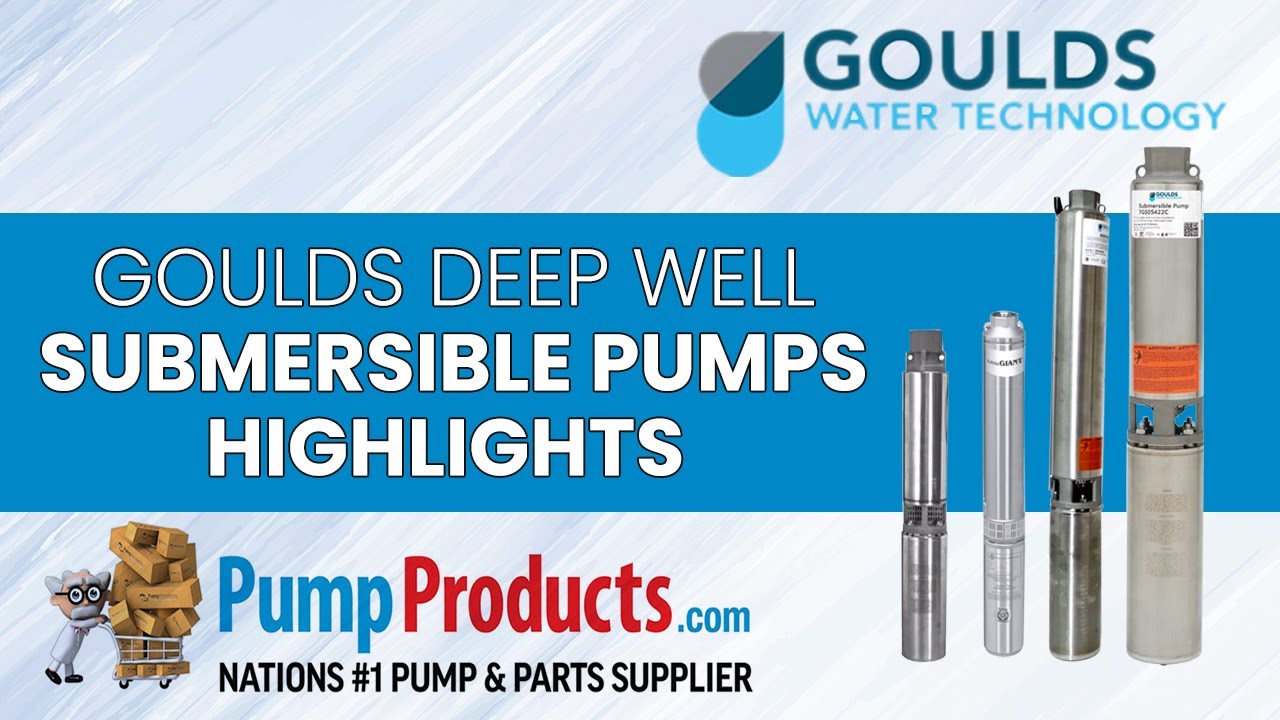
Energy efficiency is as much about the total cost of ownership as about the immediate energy bill. Goulds deep well pumps vary in price, but the most persuasive case for any model rests on reliability, ease of service, and the system’s lifetime energy use. A slightly higher upfront cost can be justified if it translates into better BEP alignment, longer service intervals, and reduced downtime. The math is not purely about watts saved per hour; it’s about predictable performance, fewer emergency repairs, and the comfort of knowing that a well and pump will continue to serve without dramatic energy spikes during peak demand.
I have seen installations where a modest upgrade—say, moving to a slightly larger motor with a smarter controller and a better storage tank—delivered a net savings in energy cost that paid back the investment within two to four years, depending on usage. In other cases, the payback extended longer because the variable driving electricity costs, seasonal water demand, or well yield did not favor a quick rebound. These are not failures of the equipment; they are reminders that energy efficiency is a living, site-specific practice.
Practical steps to move toward better efficiency
If you are evaluating Goulds deep well pumps for a current installation or planning a replacement, here is a concise playbook built from field experience. It avoids theatrics and focuses on reproducible steps you can apply at the site.
- Start with accurate measurements of the well and the demand. A simple, robust data set includes the static water level, the drawdown level under peak flow, the expected gallons per minute, and the maximum pressure you want in the house or facilities. Then compare those figures to the pump curve and the system curve to identify gaps. Confirm the actual piping layout beyond the wellhead. Look for unnecessary bends, overly long runs of small-diameter pipe, or valve settings that reduce the effective diameter. Upgrading to a larger pipe, when feasible, can improve efficiency by reducing dynamic head losses. Evaluate the storage strategy. If the system uses a pressure tank, ensure it is correctly sized for the intended use. If it is too small, consider a larger tank or a staged pumping approach to reduce cycling and energy waste. Consider a control upgrade if it’s within budget. A controller that maintains pressure within a tight band and responds intelligently to changes in demand can produce meaningful energy savings. If the system already has a controller, ensure it is correctly tuned to the well and the household or facility load. Plan for preventive maintenance. Create a simple schedule to inspect impellers, seals, and valves, and to test the electrical components. The goal is to catch wear or misalignment before it becomes an energy decision you regret.
The human factor: experience matters as much as specs
All the numbers in the world won’t substitute for field experience. The best results come from a contractor who has installed and serviced a broad mix of Goulds deep well pumps under various conditions. A practitioner with hands-on know-how can interpret performance curves, anticipate how a particular well will behave as water levels shift, and explain trade-offs in language that makes sense to the homeowner or the farm operator. It is this blend of technical knowledge and practical judgment that ultimately drives genuine energy efficiency gains. The model might be well chosen, the controller properly configured, and the storage appropriately sized, but without a careful, experience-grounded approach to operation, efficiency will drift with the seasons.
Closing thoughts on energy efficiency and Goulds deep well pumps
The best deep well pump is not the one with the highest flow or the deepest head on paper. It is the one that delivers the required water reliably, at the lowest practical energy cost, over the long arc of its service life. Goulds pumps have proven, in many settings, to be capable of meeting that standard when paired with thoughtful system design, precise field measurements, and proactive maintenance. The insights come from listening to the system, not just reading the spec sheet. When a homeowner tells me that the monthly bill dropped by a few dollars after a small adjustment, I know we have found a working balance between demand, availability, and energy use. That is the mark of an efficiency-focused installation, not a one-off tweak.
In the end, a deeper understanding of how water moves from the well to the tap—how head, flow, and energy interact—provides the best compass for selecting Goulds deep well pumps and configuring them to perform efficiently. It is a discipline built on data, experience, and the willingness to adjust as conditions change. The payoff, over time, is concrete: reliable water on demand, steady system performance, and energy use that you can count on rather than chase.
Two quick takeaways, distilled from years spent tracing pumps through the field, can anchor your planning and decision-making:
- The most reliable efficiency gains come from aligning the pump with the well’s actual performance and the load pattern, then stabilizing operation with appropriate storage and control strategies. Small, thoughtful upgrades—such as a properly sized pressure tank, clean valves, reduced head loss in piping, and a tuned controller—often produce measurable energy savings without the need for dramatic changes to the core pump.
If you are exploring options today, ask your local Goulds dealer about a site-specific assessment. A careful, measured approach grounded in real-world conditions tends to yield the most meaningful long-term benefits. You may discover that a modest investment now translates into years of dependable water supply and a more predictable energy footprint, which, in today’s climate, is a valuable combination indeed.